
ABOLabs LLC
How Federal Healthcare Budget Cuts Can Affect Small Healthcare Companies in Colorado

When people hear about federal healthcare budget cuts, they usually think about big hospitals, insurance programs, or government agencies.
But that is only part of the story.
Here in Colorado, smaller healthcare-related businesses can feel those same pressures too. Local diagnostics companies, specialty labs, medical manufacturers, physician support vendors, healthcare logistics businesses, research support firms, and other healthcare-adjacent companies all operate inside the same larger system. When that system tightens, smaller businesses often feel it fast.
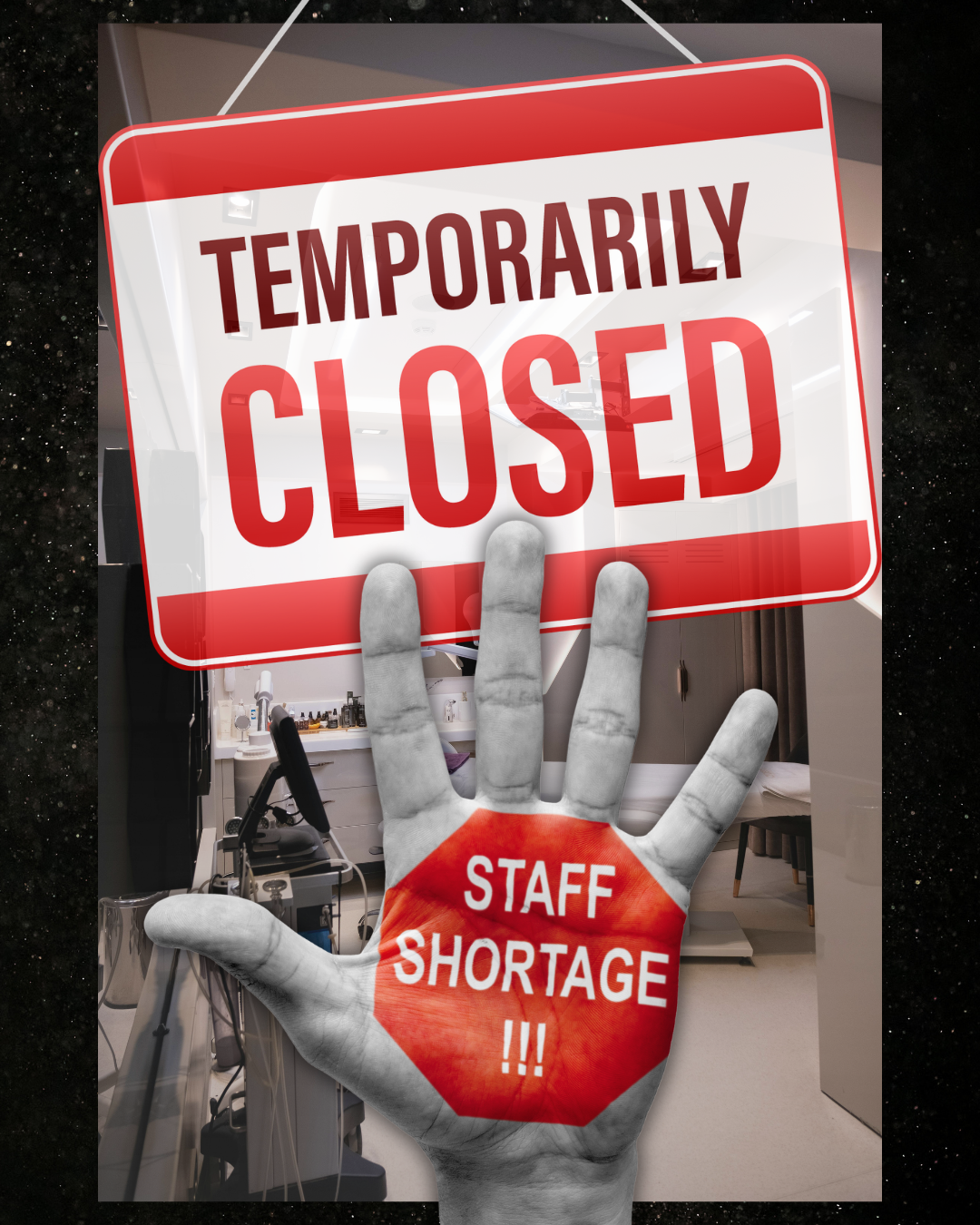
The hard part is that the damage is not always loud. It does not always look like one dramatic headline or one direct cut with a company’s name on it. More often, it shows up quietly through slower growth, delayed contracts, tighter margins, and more cautious clients.
The ripple effect starts upstream
Most small healthcare businesses are not directly funded by the federal government. But many of them rely on customers who are affected by federal policy.
That means when Medicaid is cut, when research funding becomes unstable, or when public-health grants are interrupted, the effects do not stop with major institutions. They move outward into the businesses that help support patient care, lab services, product development, diagnostics, logistics, and healthcare operations.
That is where the real squeeze begins.
Medicaid cuts can reduce demand across the system
One of the biggest current pressure points is Medicaid. KFF (https://www.kff.org/medicaid/medicaid-what-to-watch-in-2026) reports that the 2025 reconciliation law is estimated to reduce federal Medicaid spending by about $911 billion over 10 years, while also creating broader strain for states, providers, and coverage access.
When patients lose coverage or face more barriers to keeping it, care often gets delayed. Preventive visits get pushed off. Follow-ups happen less often. Routine testing may be postponed. For smaller healthcare companies, that can translate into less volume, less ordering, and less predictable revenue.
For Colorado, that matters. Access challenges already vary widely between metro corridors, suburban communities, mountain towns, and rural areas. When coverage gets tighter, the pressure does not stay in one place.
Strained providers become more cautious buyers
When hospitals and clinics feel financial pressure, they usually pull back before they expand.
Reuters (https://www.reuters.com/graphics/USA-HEALTH/RURAL-HOSPITALS/zgpolkmdbvd/) reported in March 2026 that more than 40% of rural hospitals are operating at a loss, and that Medicaid-related coverage losses are expected to create even more strain across fragile healthcare systems.
That kind of stress affects more than hospitals. It can also affect the smaller businesses that serve them. Contracts take longer. Purchasing slows down. New service lines are delayed. Pricing conversations get tougher. Businesses are asked to prove value faster and with less room for error.
For smaller Colorado healthcare companies, that often means the work does not disappear overnight — it just gets harder to close, harder to scale, and harder to forecast.
Research slowdowns can affect local innovation and support businesses
Colorado has a growing life sciences and healthcare innovation footprint, so research instability matters here too.
Some of the most severe proposed FY2026 cuts to NIH and CDC funding were rejected by Congress, according to Research!America (https://www.researchamerica.org/news/house-joins-senate-in-rejecting-administration-cuts/), but the broader funding environment has still been marked by uncertainty and disruption.
For smaller companies tied to clinical studies, academic labs, diagnostics development, assay support, or healthcare product manufacturing, uncertainty alone can cause real damage. Pilot programs may stall. Studies may be delayed. Grant-backed work may move slower. Clients may wait longer before committing.
For a large company, that may be frustrating. For a smaller local business, it can materially affect cash flow and planning.
Public-health funding instability can hit Colorado’s local ecosystem
Colorado has already seen how federal public-health funding uncertainty can create local disruption. In February 2026, The Colorado Sun reported that a federal judge blocked planned cuts to public-health grants that funded HIV prevention work and sexually transmitted disease surveillance in Colorado. (https://coloradosun.com/2026/02/12/federal-judge-stops-trump-600-million-public-health-funding-cuts)
Even when cuts are challenged or delayed, uncertainty still does damage. Hiring can freeze. Partnerships can pause. Agencies become cautious. Institutions delay decisions. Businesses that support public-health, testing, outreach, or healthcare infrastructure can feel that instability even when they were never the direct target of the cut.
Small businesses still carry their fixed costs
Here is the part that hurts smaller companies the most: operational obligations do not magically shrink when the market tightens.
Compliance still matters. Equipment still has to be maintained. Staff still has to be scheduled. Documentation still has to be done. Quality systems, transport, software, supplies, and overhead still cost what they cost.
So when demand softens but fixed responsibilities stay in place, smaller businesses can get squeezed from both ends. That kind of pressure is often much easier for a large national company to absorb than it is for a local Colorado operator.
The biggest risk is often erosion, not collapse
This is usually not a story of instant shutdown.
It is a story of erosion.
It looks like fewer new opportunities, longer decision cycles, more price resistance, thinner margins, slower payments, and less predictable growth. It looks like strong businesses having to work harder just to stay in the same place.
That is often how federal budget pressure reaches small healthcare businesses: not in one dramatic hit, but in a slow accumulation of obstacles that make it harder to grow, hire, invest, and plan.
Why this matters in Colorado
Colorado’s healthcare landscape is not one-size-fits-all. It includes dense metro demand, growing suburban regions, mountain communities, and rural areas where access can already be fragile.
That makes smaller healthcare companies especially important here. These businesses often fill the gaps that larger systems cannot cover efficiently. They provide specialized support, flexible service, localized logistics, and faster response in places where bigger players may not be built to move well.
When federal healthcare cuts tighten the broader system, smaller Colorado businesses often end up carrying more pressure with fewer resources.
Final thoughts
Federal healthcare budget cuts do not only affect major hospitals and government programs. They can also reshape the business environment for smaller healthcare companies across Colorado.
That includes diagnostics firms, specialty labs, medical manufacturers, service vendors, logistics providers, research support companies, and other businesses that help keep healthcare moving behind the scenes.
Sometimes the effects are immediate. More often, they are gradual.
But either way, the result can be the same: tighter budgets, slower growth, and a harder path forward for the small healthcare businesses helping hold the system together. (https://www.kff.org/medicaid/medicaid-what-to-watch-in-2026)